Rethinking Patient Triage for early intervention in primary healthcare

Rethinking Patient Triage for early intervention in primary healthcare

Rethinking Patient Triage for early intervention in primary healthcare

Improving queuing and triage practices is essential for early assessment of medical severity and timely intervention. This study aimed to evaluate the current triaging and queuing processes of Elephant's affiliate healthcare facilities and provide research-based recommendations for designing a triage feature for the Elephant OS.

ROLE

UX Researcher

RESEARCH CATEGORY

Explorative/ Evaluative research

TOOLS

Miro, Slab, Figma

The Problem

The Problem

The Problem

Elephant’s affiliate facilities in Ghana had long relied on a paper-based triage system. This led to poor prioritization and critical communication gaps. Urgent cases were often mismanaged or misclassified, with patients face long wait times for essential care.

Discovery

Discovery

Discovery

Our main objective was to understand the current paper-based triage system, identify its strengths and weaknesses, and adapt it to a digital format that accommodates local healthcare practices.

Research Goals

  • Understand the specific triage system used at our healthcare facility and how it is applied in urgent care intervention.

  • Analyze the workflows, clinician-patient interactions and communication process to identify what works, what does not and what can be improved.

  • Gather insights that will inform the design of a standardized, efficient and user-friendly triage workflow that addresses the clinicians’ needs while improving patient outcomes.

  • Understand the specific triage system used at our healthcare facility and how it is applied in urgent care intervention.

  • Analyze the workflows, clinician-patient interactions and communication process to identify what works, what does not and what can be improved.

  • Gather insights that will inform the design of a standardized, efficient and user-friendly triage workflow that addresses the clinicians’ needs while improving patient outcomes.

Methodology

Methodology

Methodology

Desk Research

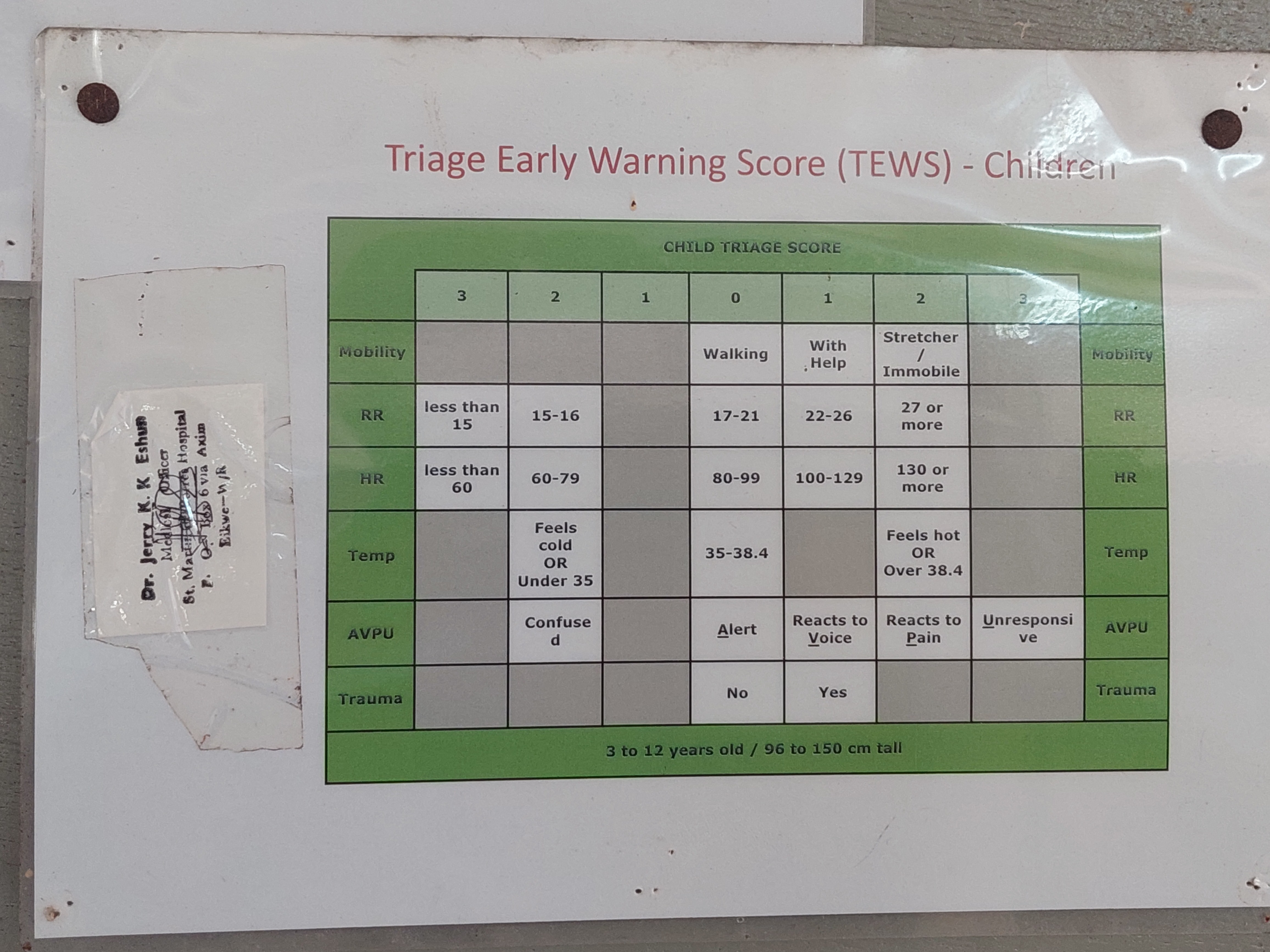
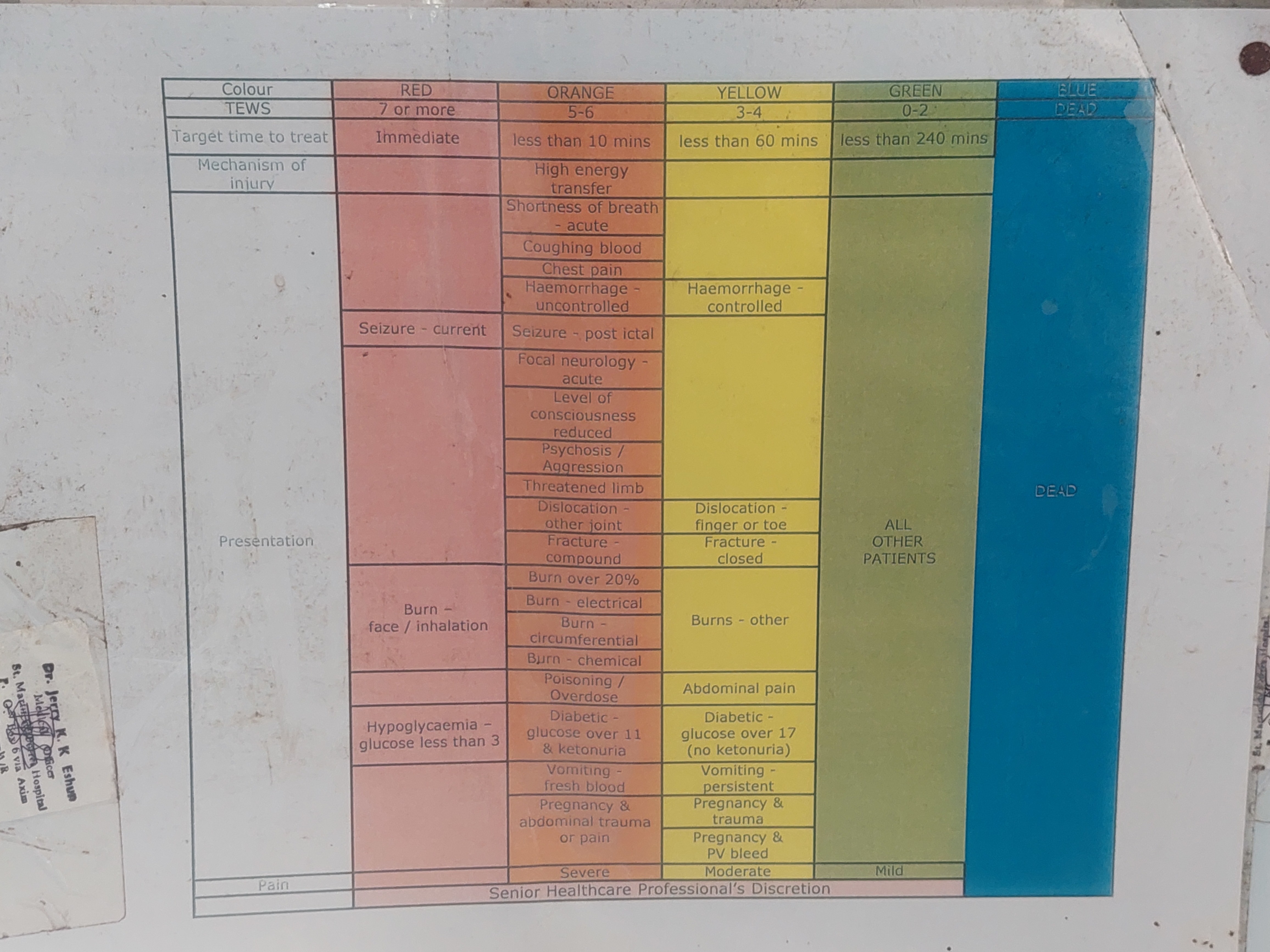
We began by reviewing the African triaging standard, i.e. The South African Triage Scale(SATS). This helped us establish a conceptual understanding of this triage model and how it is used in urgent care intervention.
Conceptual Inquiry

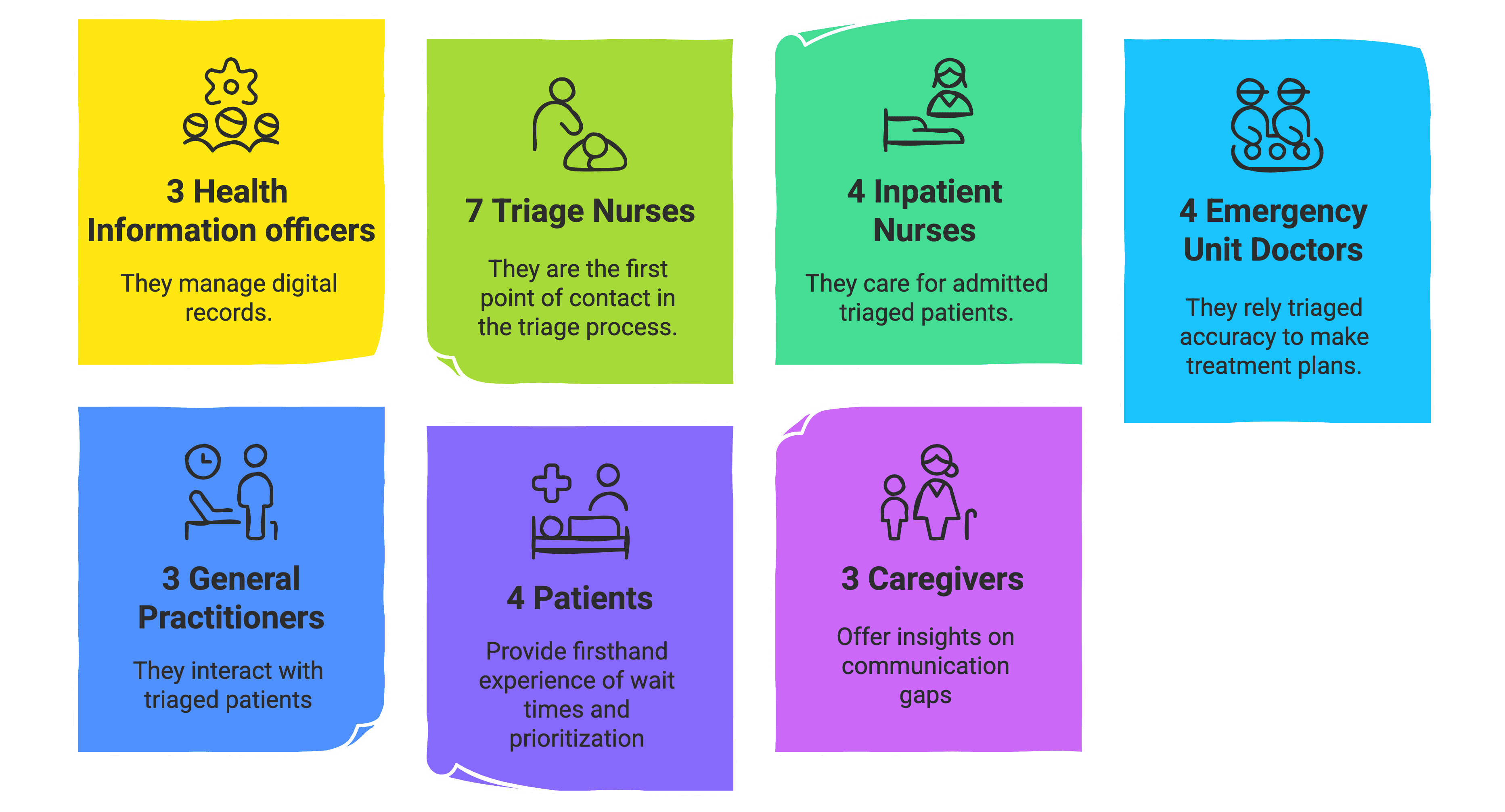
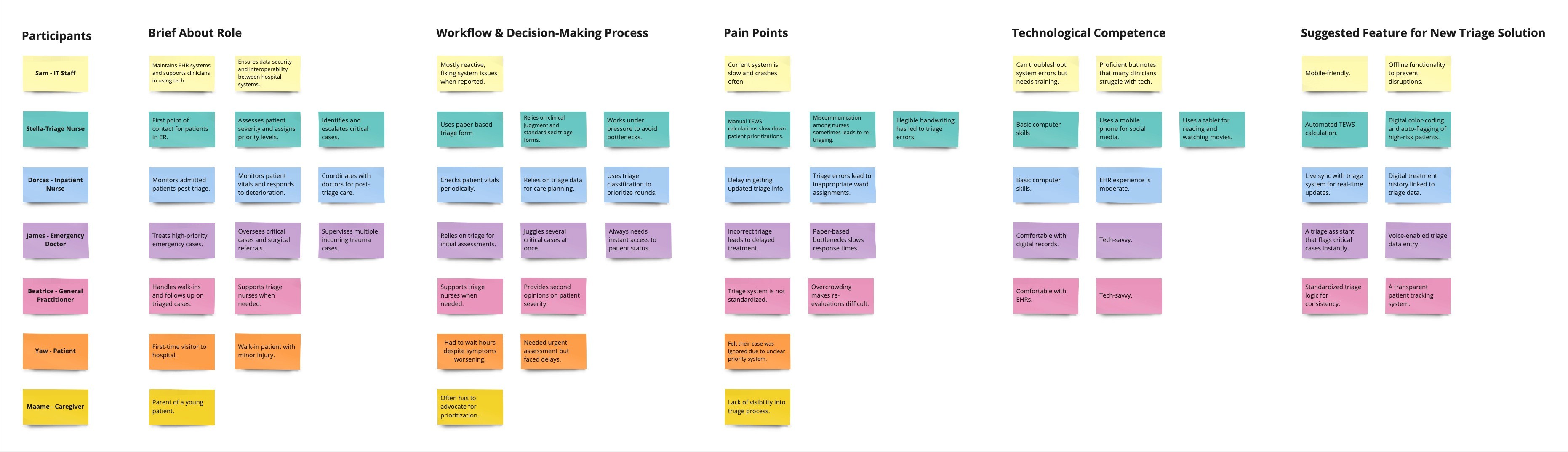
Field visits to Accident and Emergency units in seven healthcare facilities across Ghana’s Western, Ashanti, and Northern regions revealed the triage process in action.

Our observations and follow-up interviews highlighted the patient-health worker dynamic and the flow of information among clinical staff, along with challenges in patient prioritization and structural inefficiencies, further emphasising the need for a streamlined digital solution.

Competitor Analysis

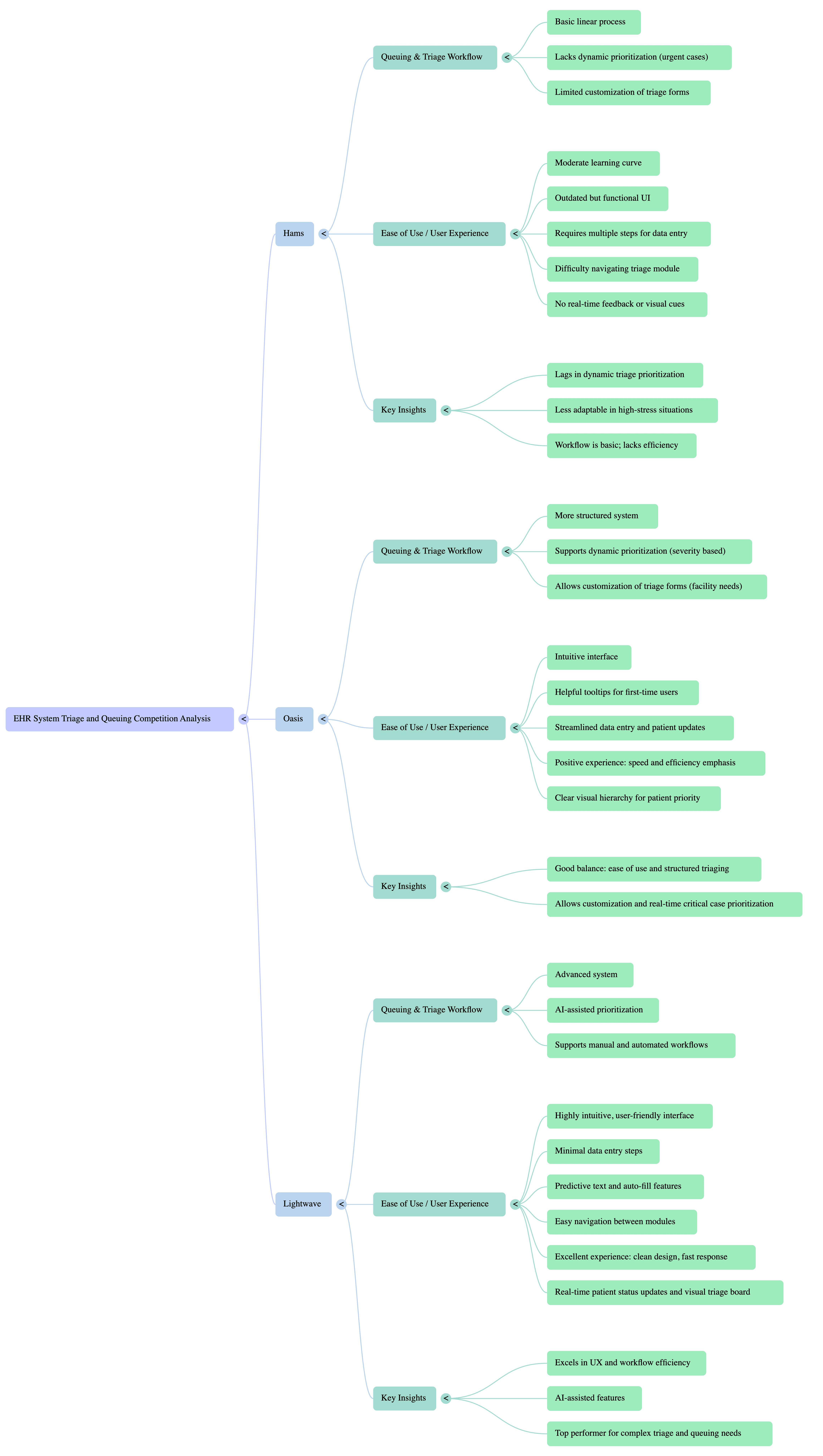
By evaluating triage features of some notable EHR systems on the market Ghanaian market, like OASIS, HAMS, and Lightwave, we were able to identify and analyse strengths and weaknesses in how they integrated triage workflows. Criteria such as user experience, layout, navigation structure, accessibility, and performance were critical in our analysis
Key insights

Key insights

Key insights

Paper-based bottlenecks

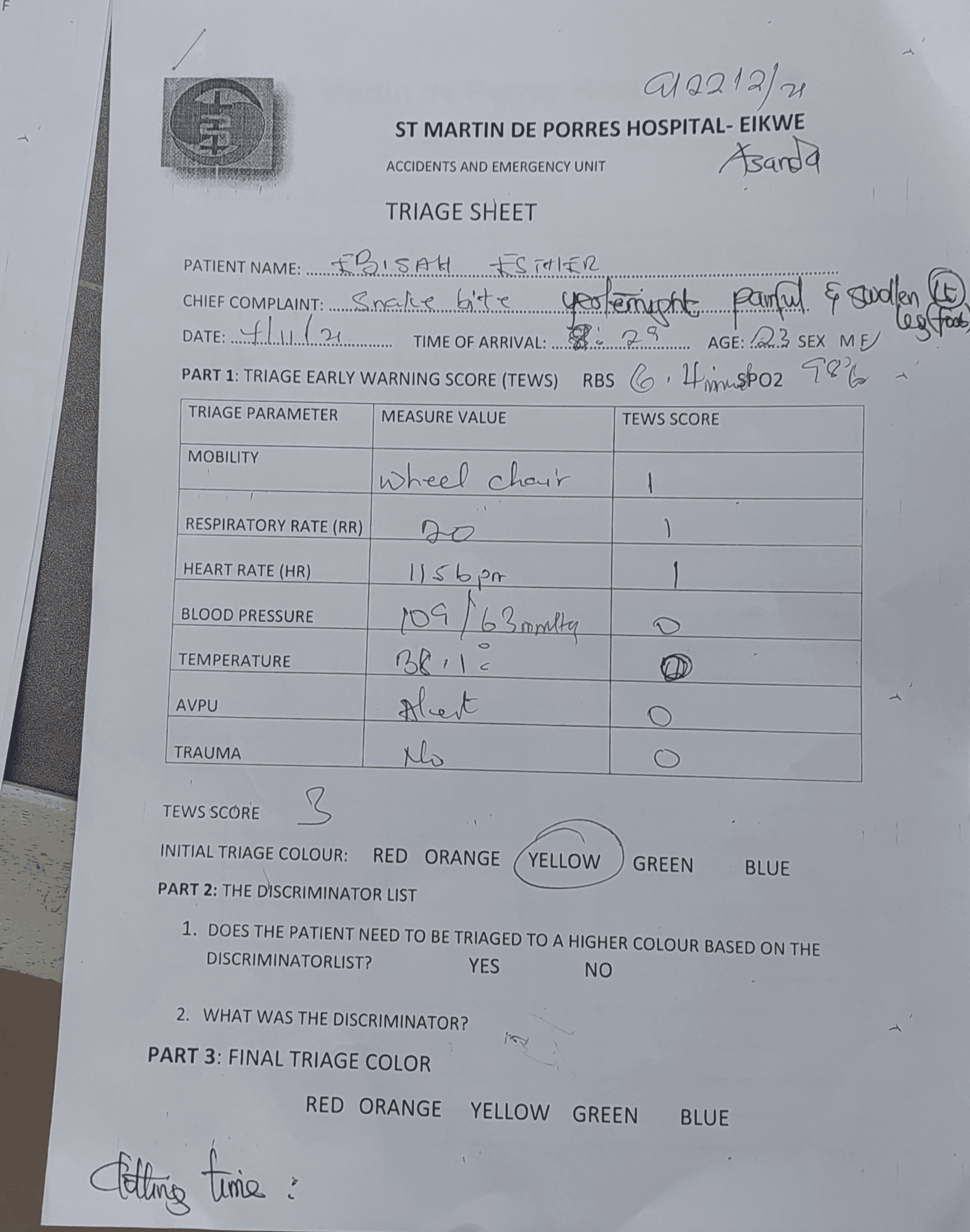
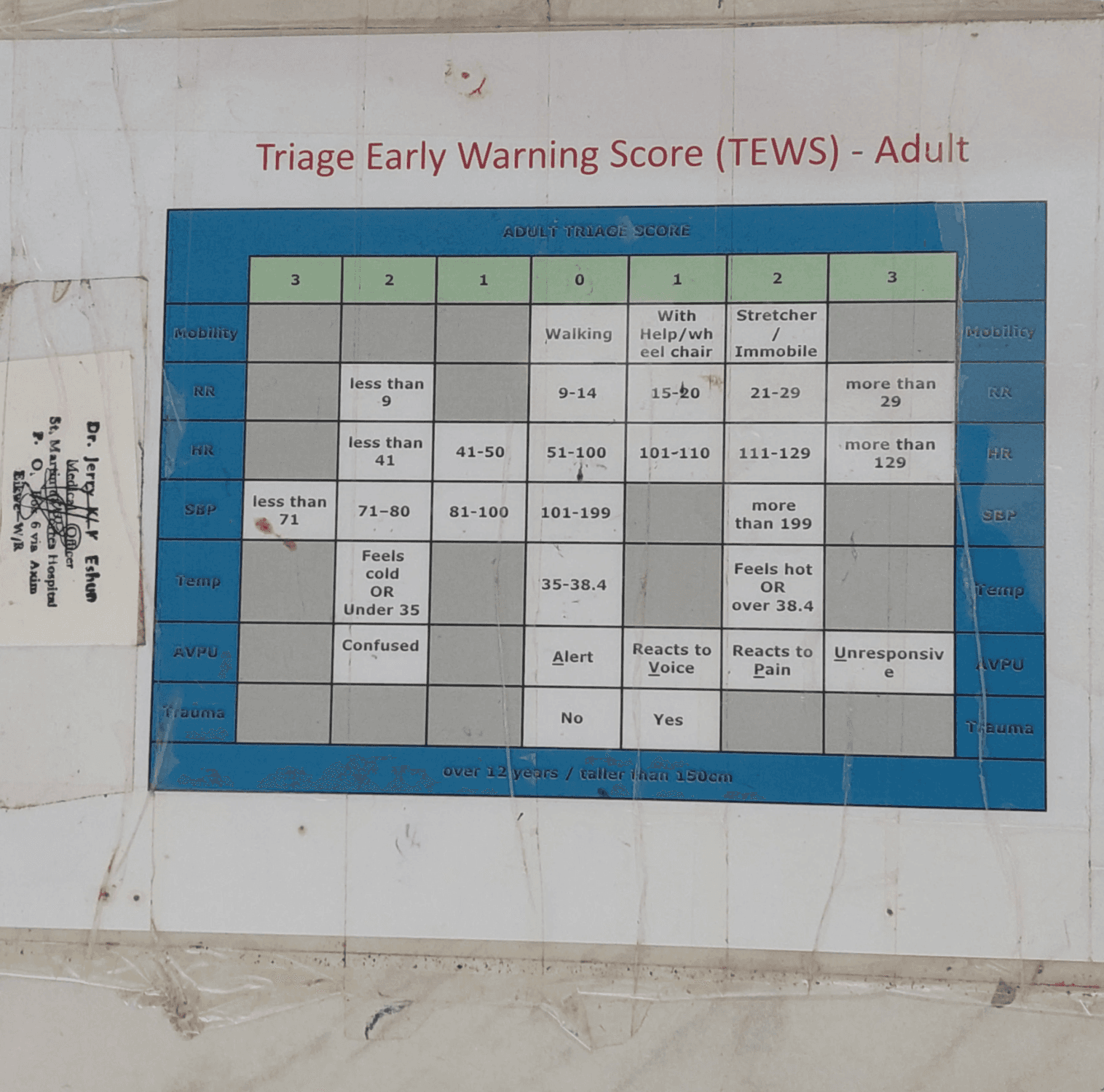
Clinicians rely on outdated paper triage, which prevents consistent patient prioritization. In high-stress settings, urgent cases risk getting overlooked due to small clerical errors. Manually calculating the Triage Early Warning Score (TEWS) consumes critical time and focus needed for patient assessment, a challenge faced by many nurses.
  • At a facility in Eikwe, on a field visit, I observed a nurse spend valuable minutes calculating a score for a patient with a snake bite.

  • At another facility I recall a nurse record a respiratory rate 4 instead of 9 on a triage form due to poor handwriting, leading to the patient’s miscategoriszation despite showing signs of discomfort.

  • At a facility in Eikwe, on a field visit, I observed a nurse spend valuable minutes calculating a score for a patient with a snake bite.

  • At another facility I recall a nurse record a respiratory rate 4 instead of 9 on a triage form due to poor handwriting, leading to the patient’s miscategoriszation despite showing signs of discomfort.

Inconsistent protocols

Inconsistent protocols across facilities caused treatment delays and varied patient experiences. Triage was often subjective, relying on ad hoc verbal assessments instead of standardized forms. This inconsistent prioritization delayed high-risk patients.

For example, I was told of a scenario where communication breakdown once misclassified an acute appendicitis patient as non-urgent, leading to a delay in surgery.

Technological Gaps in Competitor EHRs.

Competitor EHR systems lacked intuitive triage features and were often not optimised for real-world, high-stress scenarios. They mostly lacked automated prioritizations and were unresponsive or available on mobile devices, making them physically impractical for clinicians on the move during patient examinations.
  • In facilities where some of these EHRs are used, clinicians still use the paper-based approach when triaging patients only to key in the records later into the system via a desktop or a laptop.

  • A system that is used at a high-volume facility frequently crashes due to poor internet connections, leaving staff unable to access and update patient data.

  • In facilities where some of these EHRs are used, clinicians still use the paper-based approach when triaging patients only to key in the records later into the system via a desktop or a laptop.

  • A system that is used at a high-volume facility frequently crashes due to poor internet connections leaving staff unable to access and update patient data.

Proposed Design Decisions

Proposed Design Decisions

Proposed Design Decisions

User Flow

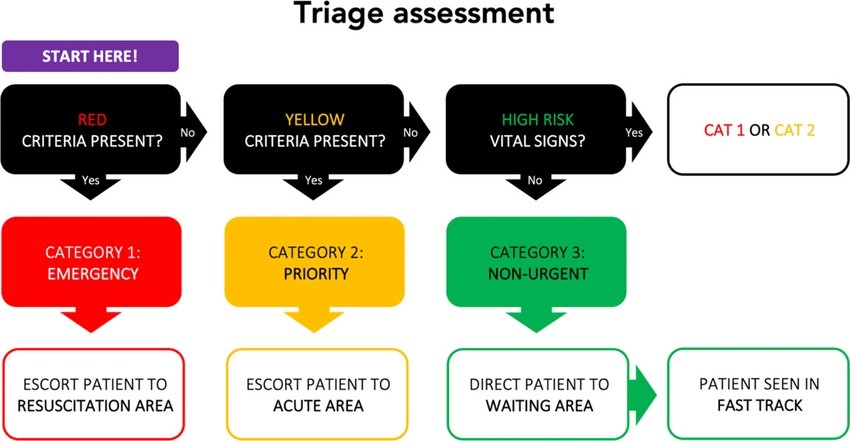
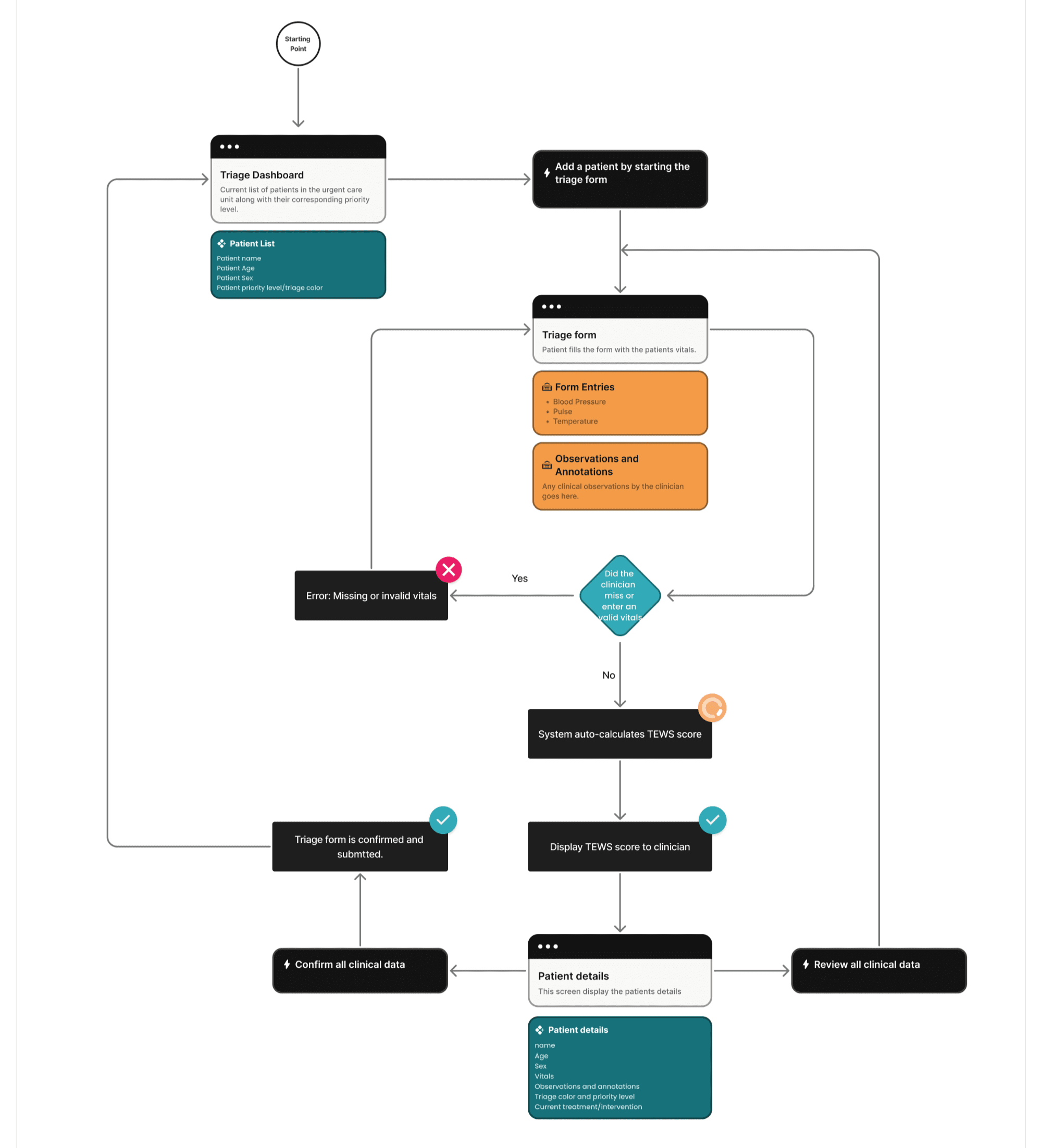
Based on our insights we create a high-level user flow of how the patient queuing and triage feature is supposed to function.
Clinicians

  • Triaged patient Queue: A Triaged queue gave nurses a clear picture of the assigned colours and priority levels for patients within a digital queue for each consultation room.

  • Mobile friendliness: Ensuring usability on mobile and tablet devices so clinicians can easily move from patient to patient.

  • TEWS Automation: Automating the calculation and assignment of TEWS so clinicians have enough mental bandwidth to carefully asses the patient’s condition.

  • Operationally mimic the paper-based system is as much as possible to ensure a seamless transition to digital workflow without drastically changing essential aspects of urgent care protocols, reducing the amount of training required for the new workflow.

  • Triaged patient Queue: A Triaged queue gave nurses a clear picture of the assigned colours and priority levels for patients within a digital queue for each consultation room.

  • Mobile friendliness: Ensuring usability on mobile and tablet devices so clinicians can easily move from patient to patient.

  • TEWS Automation: Automating the calculation and assignment of TEWS so clinicians have enough mental bandwidth to carefully asses the patient’s condition.

  • Operationally mimic the paper-based system is as much as possible to ensure a seamless transition to digital workflow without drastically changing essential aspects of urgent care protocols, reducing the amount of training required for the new workflow.

Patients

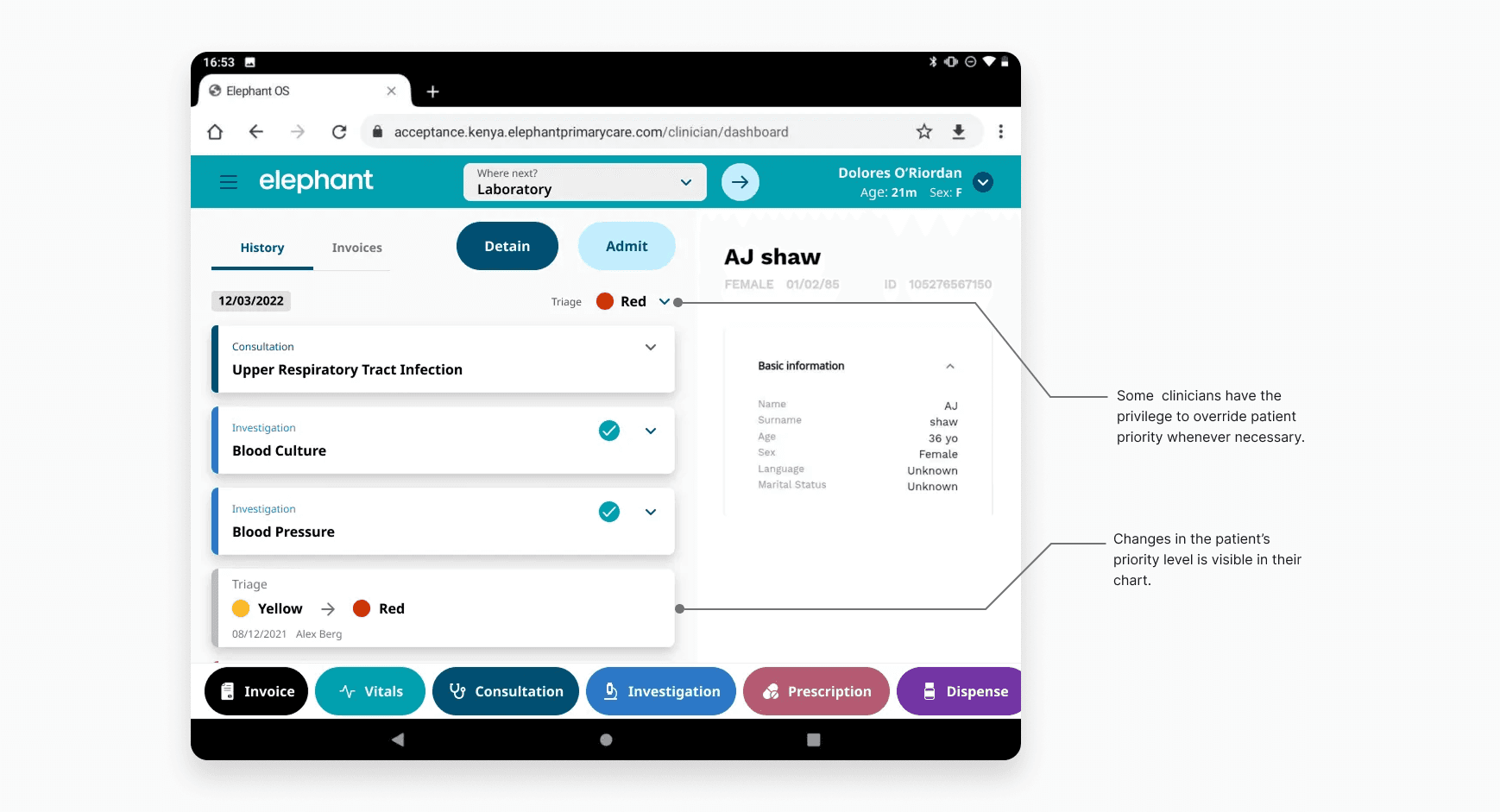
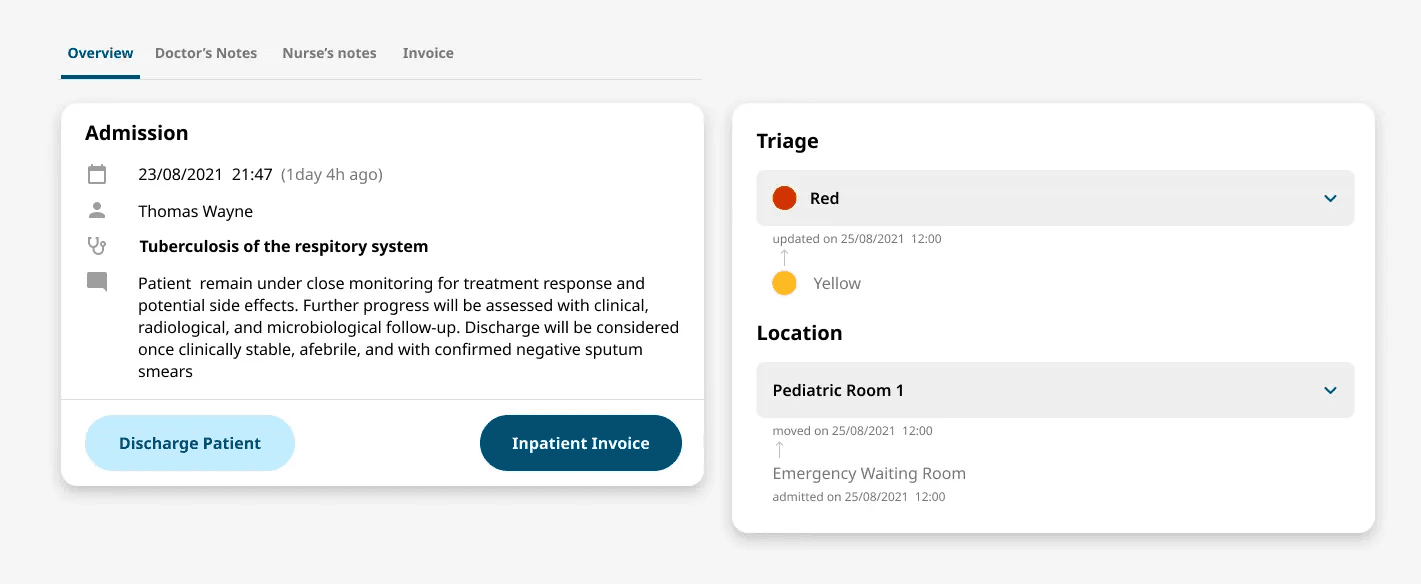
Making the patient triage sensitive to real-time care events so a patient’s priority changes automatically with any change in their condition, even when on admission.
Strategic Decisions

  • Incorporating triage into our existing digital queues feature for consultations so that when patients with various conditions are added, urgent cases are automatically prioritised.

  • Informing the implementation or adoption of a prioritization algorithm that can quickly calculate the triage status of a patient on admission, sort and flag high-risk patients to ensure early response to critical cases.

  • Addressing some of the gaps in current EHR systems such as minimising data entry, reducing step count, time on task and incorporating real-time feedback and visual cues.

  • Incorporating triage into our existing digital queues feature for consultations so that when patients with various conditions are added, urgent cases are automatically prioritised.

  • Informing the implementation or adoption of a prioritization algorithm that can quickly calculate the triage status of a patient on admission, sort and flag high-risk patients to ensure early response to critical cases.

  • Addressing some of the gaps in current EHR systems such as minimising data entry, reducing step count, time on task and incorporating real-time feedback and visual cues.

Reflections

Reflections

Reflections

  • Although this was unplanned, I learned that having stakeholders around to hear some of these stories first-hand increased interest and buy-in. Moreover, making them part of our synthesis sessions helped us interpret our insights from multiple perspectives.

  • This study uncovered how little we understood the workflow of clinicians and the experience of patients. Shadowing out users during the contextual enquiry exposed us to the nuances and details we otherwise wouldn’t uncovered by other means.

  • Switching from a paper-based to a digital workflow does not always guarantee a better user experience. Paper-based systems although manual and prone to errors, are immune to system crashes downtimes and delays. When testing our solution it was important that we ensured these conditions do not disrupt the clinicians’ workflow as this could potentially escalate existing pain points or create new ones.

  • Although this was unplanned, I learned that having stakeholders around to hear some of these stories first-hand increased interest and buy-in. Moreover, making them part of our synthesis sessions helped us interpret our insights from multiple perspectives.

  • This study uncovered how little we understood the workflow of clinicians and the experience of patients. Shadowing out users during the contextual enquiry exposed us to the nuances and details we otherwise wouldn’t have uncovered by other means.

  • Switching from a paper-based to a digital workflow does not always guarantee a better user experience. Paper-based systems, although manual and prone to errors, are immune to system crashes, downtimes and delays. When testing our solution, we needed to ensure these conditions do not disrupt the clinicians’ workflow, as this could potentially escalate existing pain points or create new ones.

Get in touch

Shoot me a message

eanaglo12@gmail.com

© 2025 All rights reserved.

Featured Case Studies

Ecobank

Bridging Borders with Digital Remittance for Europe-Ghana Migrants

MTN

Designing tools for processing pensions

Informing redesign decisions with fundational research

StrideHx

Empowering Mothers with Antenatal and Postpartum care

Get in touch

Get in touch

Shoot me a message

eanaglo12@gmail.com

© 2025 All rights reserved.

Create a free website with Framer, the website builder loved by startups, designers and agencies.